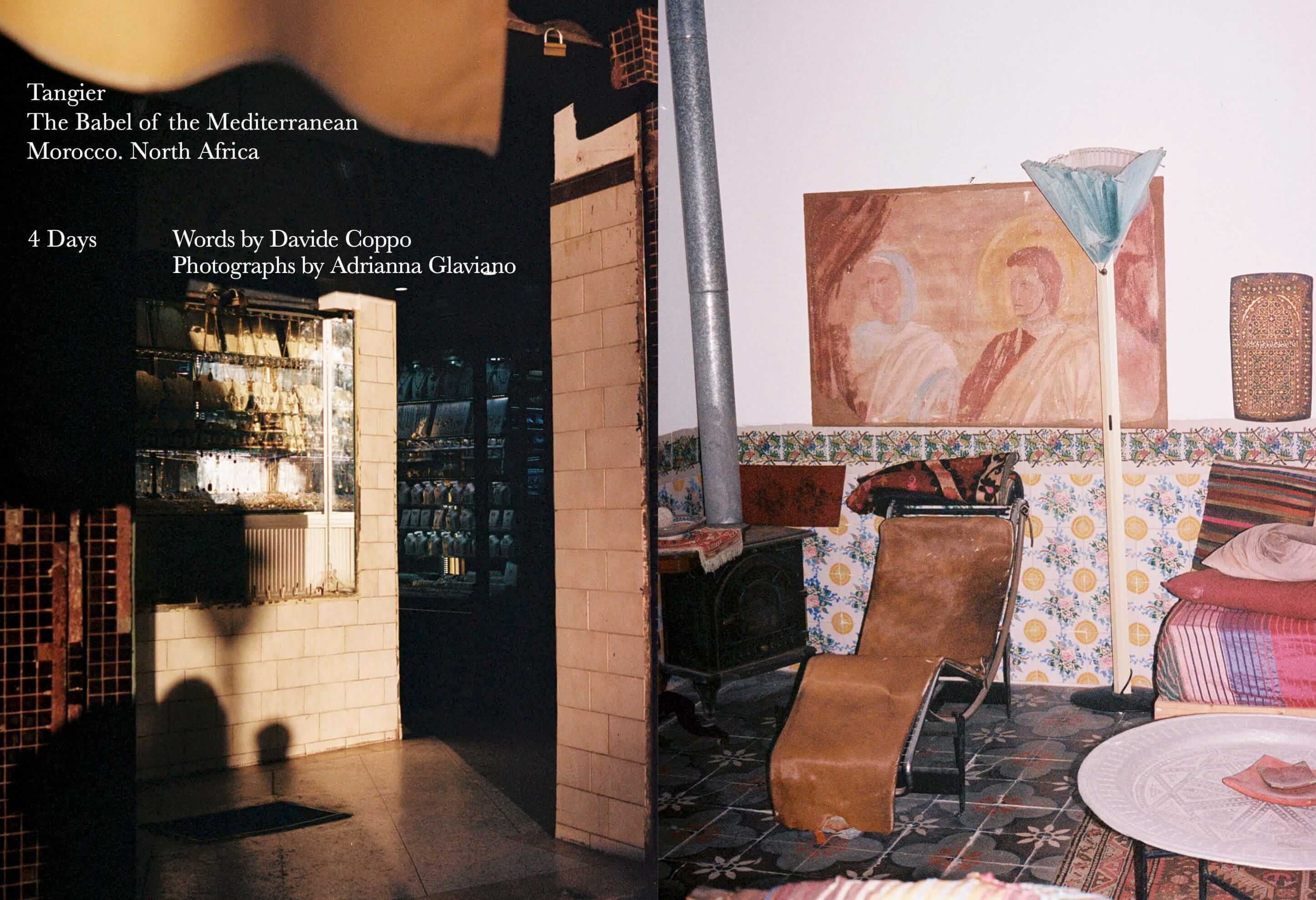
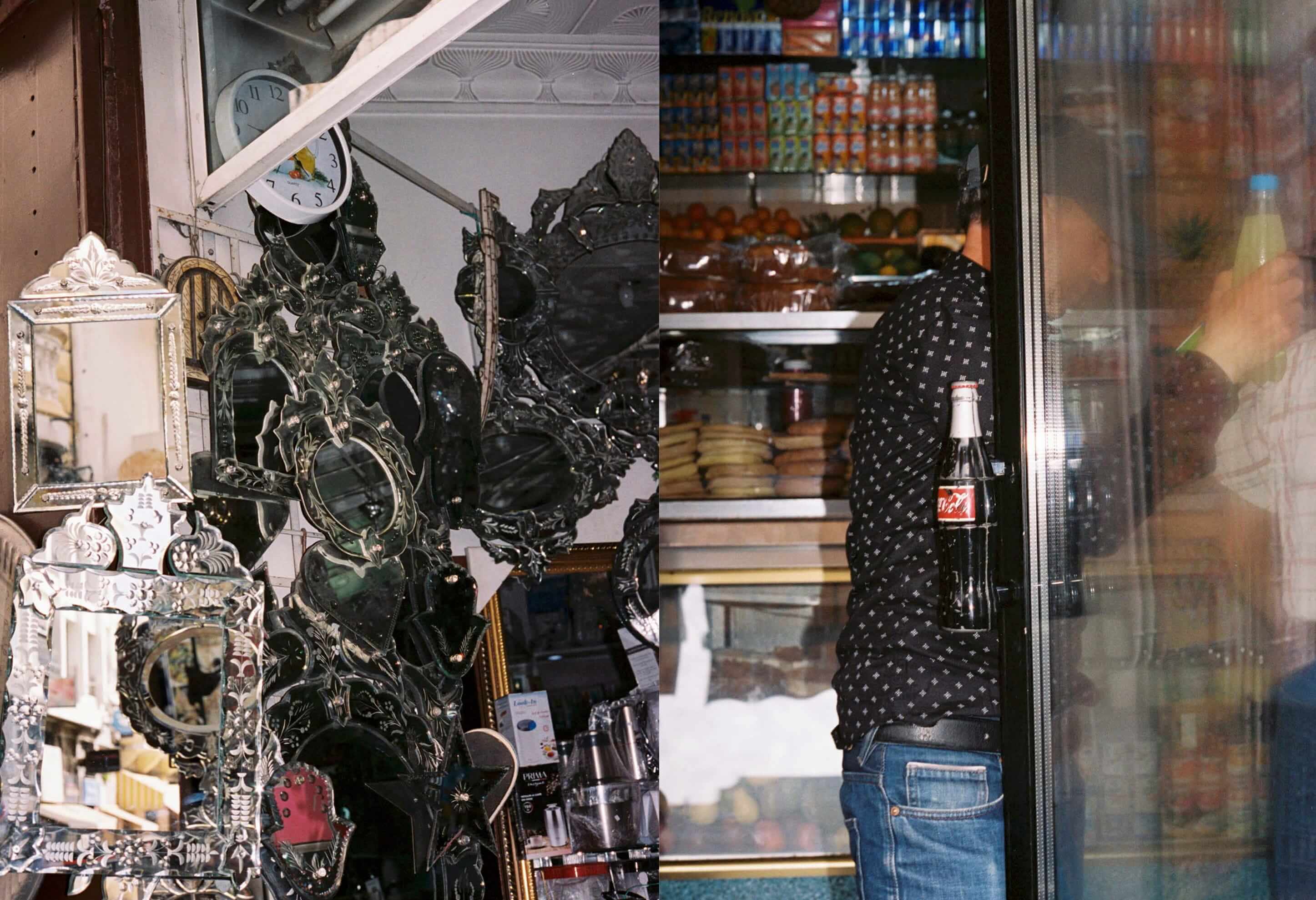
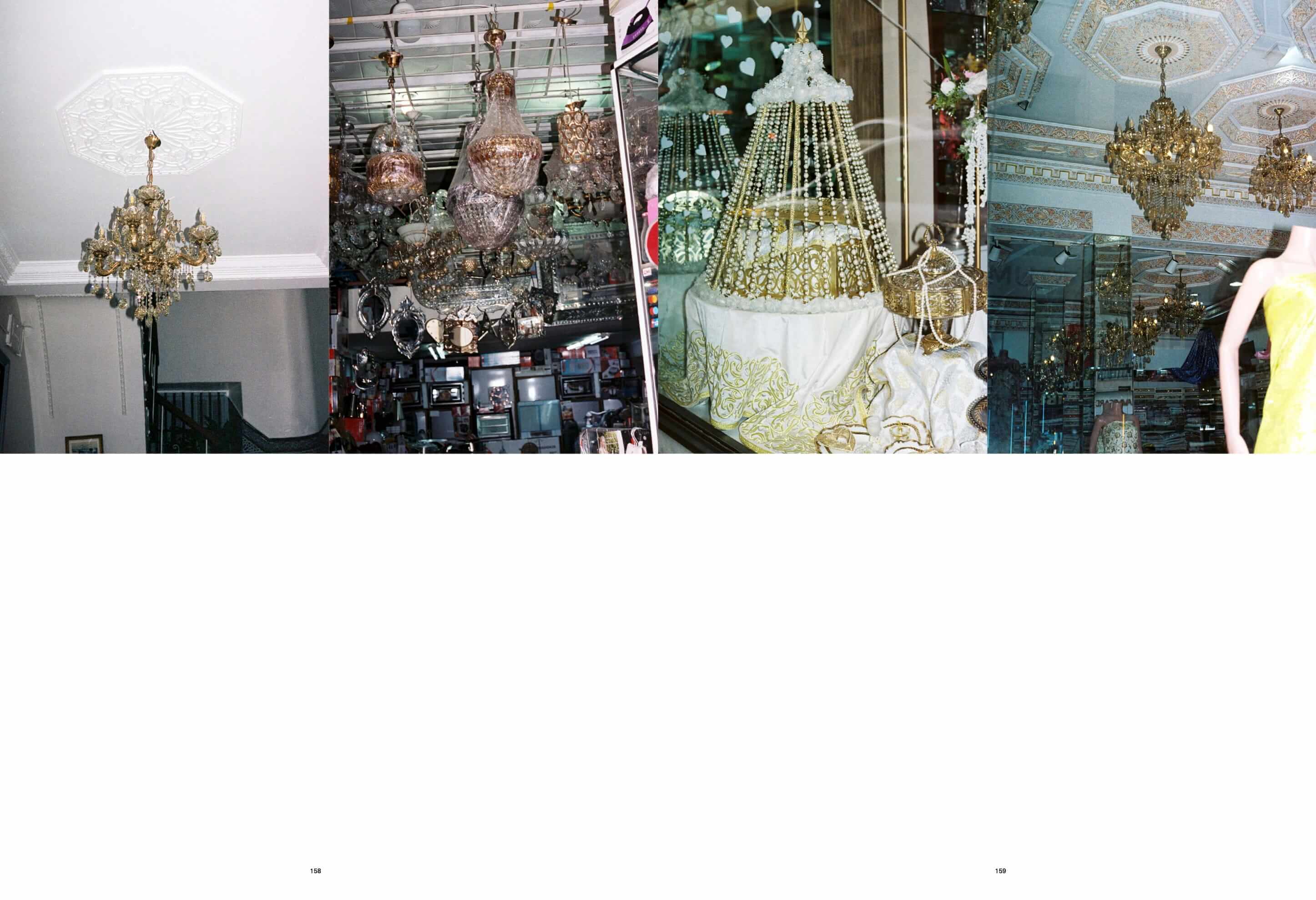
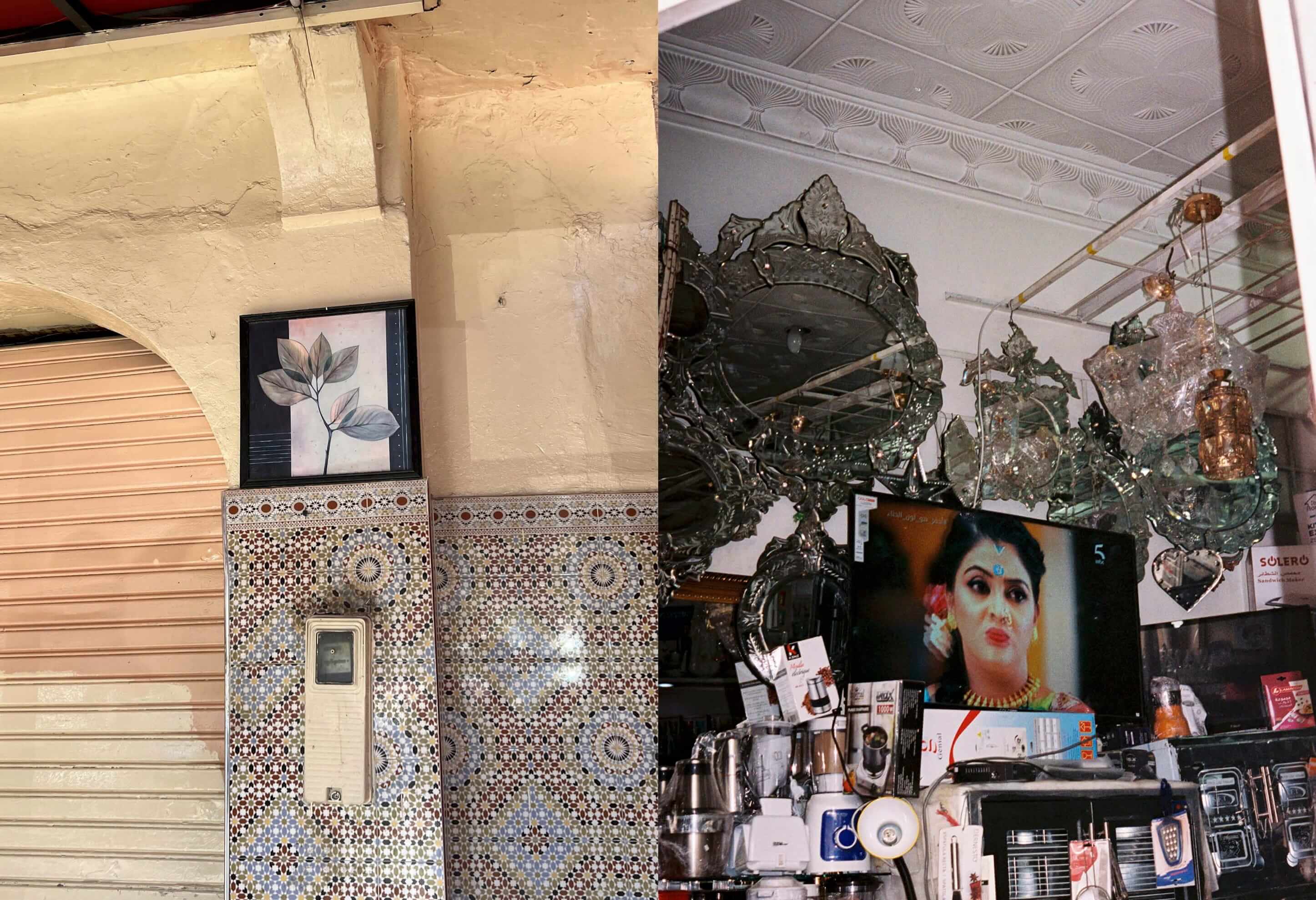
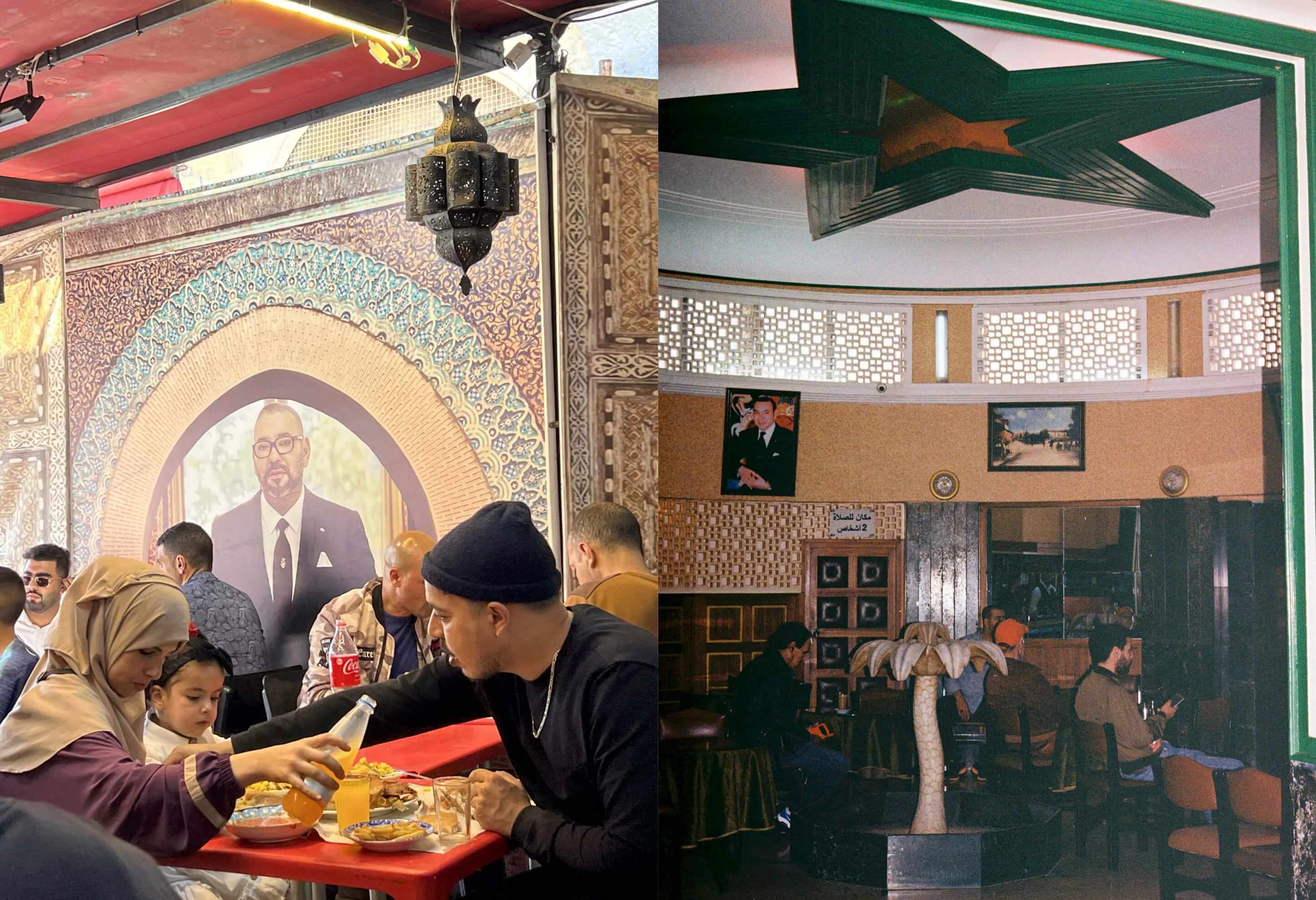
Morocco. North Africa
“It’s like not really being in Africa,” says Mohamed as he drives through the new neighbourhoods of Tangier where many tall white buildings are shooting up. It’s a mild Friday evening and we’re on our way to the house on the hill where I’ll be sleeping for the next few days. He said it first, I’ll think so too later. But when you say Africa, you need to get straight what you mean. Fifty-four states, one and a half billion inhabitants, three times the size of Europe. For a European, it’s difficult to be fully aware of how much even just naming it charges the imagination with exoticism and colonial prejudices. And then, in Morocco, there’s also the deep-rooted question of identity: is the country more African or more Arab? But I’ve only been here for an hour, I can’t already be asking myself these questions. It’s already dark in Tangier, Mohamed’s van climbs the hill between shopping centres, neat and tidy flower beds, eucalyptus trees and buildings protected by the army. I register all the images in my mind: I’m here to write about this place, to produce words that will accompany a series of photographs taken at the city’s kasbah. I know that I’m not here to understand what this city is, in such a short period. Months wouldn’t be enough. I’m here, I tell myself, to idle away the time. One of the most authentic activities to do here in Tangier, I thought. Well, at least for those like me, from the northern part of the Mediterranean.
Most of those visiting Tangier today stay in the lowest part of the city, around the kasbah. For me it’s over an hour’s walk to get there, downhill from the area of luxury villas and more normal residential neighbourhoods, government buildings and shopping centres, then across other streets where several buildings are still under construction, to finally see the sea and the old town. Mohamed points to the construction sites. He says: “They’re nice buildings, cheap but nice.” There are also lots of them: Tangier had less than 700,000 inhabitants in 2005. Twenty years later, that number has almost doubled, to well over a million. It’s a migration of two different, almost opposite signs.
Today’s Tangier is on the crest of a wave of widespread, both commercial and cultural and, of course, touristic hype. Yesterday’s Tangier was a place to avoid, notorious and dangerous. Yesteryear’s Tangier was one of the freest places in the whole Mediterranean. Yesterday is the 1970s, 1980s and 1990s. Yesteryear, more or less all of the twentieth century, was a unique case in geopolitical history. Let’s start there.
Before the First World War, the teams that would shape the geopolitics of the century had already lined up in their respective halves. They’d started to get into position in the early twentieth century, off the coast of Morocco. These diplomatic skirmishes and military tensions, taking place in the years prior to the creation of the French protectorate (read: colonization) over Morocco, were known as the “Crises marocaines”. On one hand, the Germans were attempting to prevent the French from creating a sphere of influence. On the other, naturally, France was supported by Great Britain. This twofold crisis was resolved by the Treaty of Fez in 1912: Morocco became to all intents and purposes a French colony, except for Tangier. Tangier remained Tangier: a “Zone Internationale”, special territory, politically and militarily neutral, tax-free, administered by a commission composed of France, the United Kingdom, Spain, and then the Netherlands, Italy, Portugal, Belgium, Sweden and the United States.
End of the war. The advantages of being a tax haven where more or less anything goes – commercially and culturally – manifested in all their anarchic splendour. Tangier invaded by banks: 4 in 1900, there would be 85 in 1950. Freedom brought with it the Europeans and Americans. “Tangier is a frontier between dream and reality,” Burroughs wrote to Ginsberg in 1955. Paul Bowles arrived in 1947, stayed until 1999, and was the intellectual pinpoint for all the other intellectuals and expats who orbited around him. In the 1950s, there were 40,000 Muslims in the city, 31,000 Christians, 15,000 Jews. Many were artists, flâneurs, amongst whom it was not uncommon to find homosexuals free to live out their identities in the light of day. Here, of all the places in the world.
Yet bohemianism wasn’t Tangier’s only lifeblood in those years. A few weeks before leaving, I read a book that’s one of the masterpieces of twentieth-century Moroccan literature, For Bread Alone, written by Mohamed Choukri, considered one of the country’s most important intellectuals. The book is the autobiography of Choukri as a teenager. Born in 1935, he is a child of the Rif, the mountainous region that runs east from Tangier to Algeria, one of the poorest regions in the whole of Morocco. In the 1940s he emigrates with his family to the city, where he experiences all kinds of adventures, naturally misadventures of the worst kind. He lives on the streets more than at home, with an alcoholic and violent father who more than once tries to kill him. He steals, hustles, drinks and takes drugs, frequents brothels and prostitutes, and gets himself arrested. The Tangier that Choukri describes is the dark side of the bohemian moon. A sentence I underlined, one of the few poetic moments in the midst of so much misery, says: “Whenever I move in the night, or get up to go out and relieve myself, I find several cats asleep on top of me. Often I enjoyed the sound of their purring. It reminded me of a motor going in a distant factory.”1 Cats: there are still lots of them in the streets and squares. People like the young Choukri: no longer to be found in the kasbah.
To find out more, one morning I visit Kenza Bennani, designer and stylist, founder of the New Tangier clothing brand, under which she produces a contemporary take on traditional Moroccan clothes. To me she seems one of the best people to understand what Tangier is now, because of her years spent in Spain, Italy and England, and because of her choice to come back here, to establish and direct a brand that also has a political message. To present New Tangier she says: “I realized that in the West, all luxury is based on craftsmanship. And I thought: isn’t it absurd that nothing like that exists in Morocco? When you’re dealing with a country like Morocco, there’s still this post-colonial idea that craftsmanship has to be traditional, decorative, exotic. Why can’t we do modern things? Craft can be contemporary and functional here too.” These are interesting times for Tangier, she says, but not just for the city: “In general, these are interesting times for the whole of Morocco. Our parents had to build; after decolonization, the country had to be rethought. They had to focus on that. On the other hand, we have the freedom to dedicate ourselves to art, culture, design: the foundations have already been laid, we can recreate our own narrative.”
Not far from Kenza’s studio is an open-air Punic-Roman necropolis of tombs carved into the rock. You can walk, sit, have a picnic on them. They’re high up, with the sea down below. Dozens of boys and girls look out over the smooth expanse of the Mediterranean. You can clearly see the outline of Spain on the other side. So close, I think. There is much that is Spanish, Andalusian in the old town too, in the many white buildings with yellow baroque decorations on the balconies and around the windows. Not far from here there’s also a plaza de toros. I think, somewhat banally, that al-Andalus was the name that the Arabs gave to the Iberian Peninsula during the almost thousand-year domination and rule. I think back to Mohamed telling me, in Spanish, “It’s like not really being in Africa”. But we shouldn’t just ponder what Africa means, we should think about what Europe really means too. What do Stuttgart and Syracuse, La Coruña and Latina have in common? Instead we should speak of the Mediterranean as a cultural-geographical area. That’s precisely what it is. The Tangier of recent years certainly seems to belong to a part of the Mediterranean that is getting richer and cleaning itself up more than other areas. And this is what brought me to think about gentrification…