As integral to the Amazon Rainforest as its billions upon billions of Tacuma palms, rubber trees and Cupuaçu is a seemingly more transient feature: the gauzy clouds that hug the upper reaches of these trees in an ever-shifting ceiling of water vapour. These clouds are the product of evapotranspiration, the wicking away of condensed water from the uncountable leaves of the rainforest, and their movement represents a continual flow of water across South America. The Peruvian climatologist José Antonio Marengo Orsini has dubbed the phenomena “rios voadores” — flying rivers, their sum carrying more water than any liquid river on earth.

The flying rivers are best observed from overhead, from a great enough distance that it becomes possible to observe how they channel through the rainforest’s highest reaches the same way a stream fissures between stones. And just like the water of a conventional river, these clouds all flow in the same direction, towards South America’s arid central plains. Together, the flying rivers convey as many as 20 trillion litres of water vapor into the atmosphere every day, thirteen times the amount discharged by the mighty Mississippi River into the Gulf of Mexico. Without these lofted currents of clouds, the rest of South America would be a desert, a fact that only underscores the interdependence of every fragile ecosystem with the global rhythms of the Earth itself.

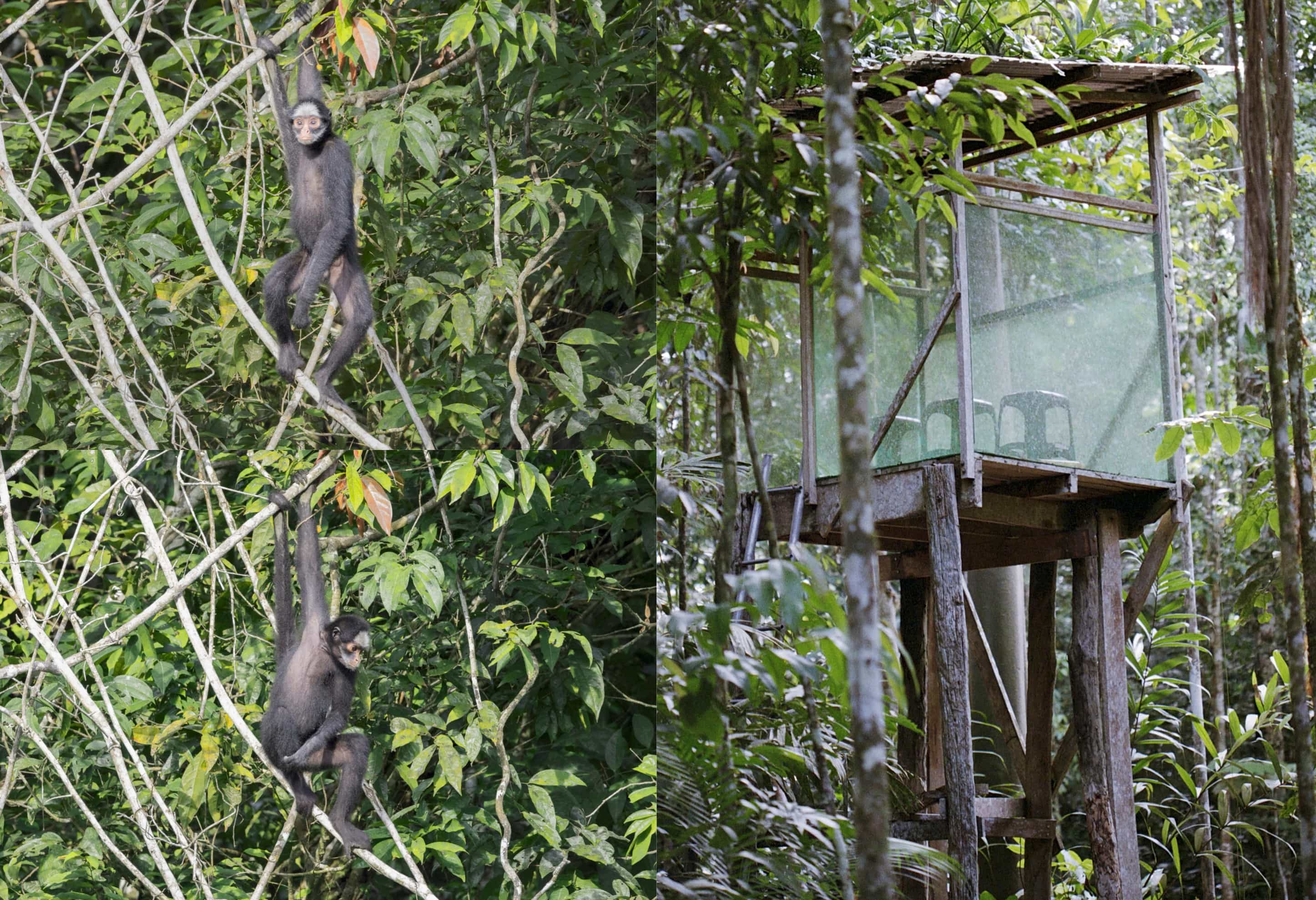
Cristalino River and Cristalino Private Natural Heritage Reserve, Alta Floresta, Mato Grosso, southern Amazon, Brazil. The RPPN sequesters carbon from the atmosphere and helps to produce the moisture-laden “flying rivers”. Canoeing over an old flooded forest, passing by ancient trees, closer to the monkeys and birds in the canopy. During the green season, from December to June,, the “Enchanted River”, a narrow river of green water that runs through a magnificent terra firma forest.