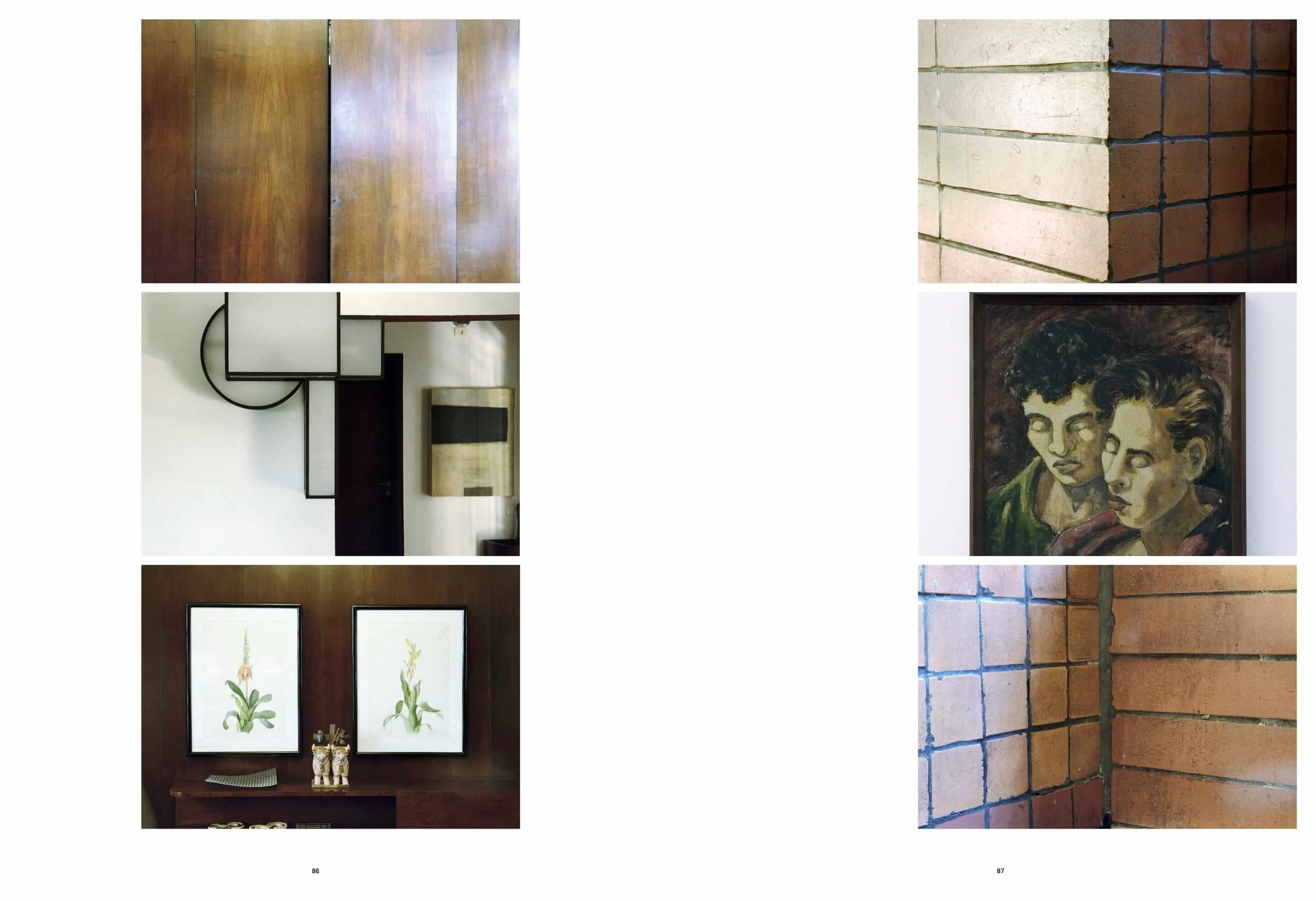
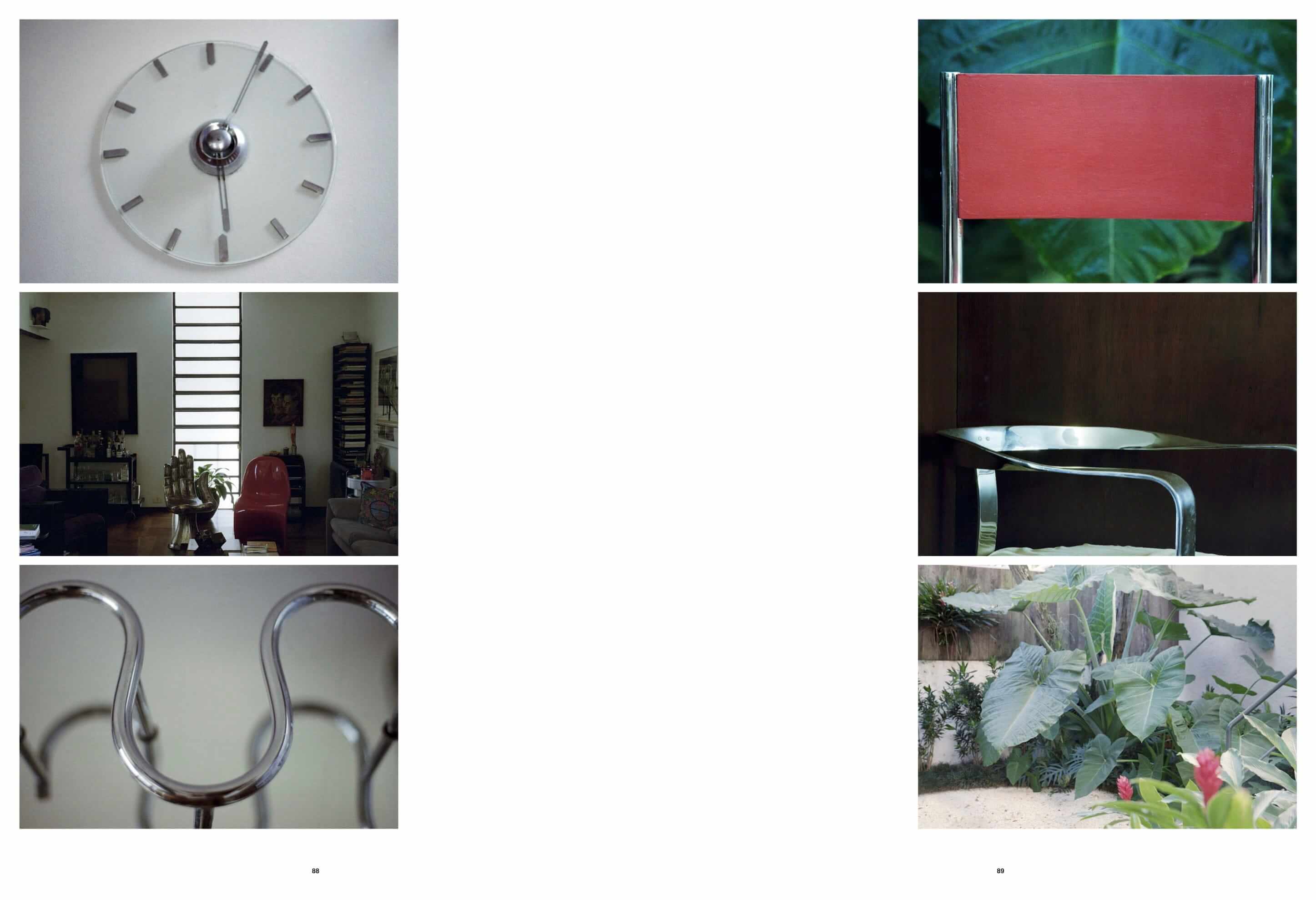
Casa Modernista 1928
Rua Itápolis, São Paulo
There was no marriage proposal. To tell the truth, I don’t even remember how we decided to fuse our lives or, in this case, our cats – two apiece. All I know is that it started with a house.
Carlos’s grandfather was a famous modernist architect. Ukrainian by birth, Gregori Warchavchik (who had designed a house that I really liked, the one belonging to my second boyfriend, Marcelo) arrived in Brazil after a time in Italy, where he had worked for a famous architect called Piacentini. He didn’t bring much more with him than his modernist ideology, which he tried to apply to his Brazilian projects.
He married Mina Klabin, a woman ahead of her times, who was very close to the February 1922 Modern Art Week artists. In 1930, Warchavchik built a house in Pacaembu using new techniques such as reinforced concrete, which expanded the range of architectural possibilities to larger, cleaner rooms with no supporting pillars. Aiming to put on a show that could illustrate the modernist aesthetic to the public, Gregori fitted the house with furniture he designed himself and art objects by his friends Tarsila do Amaral, Anita Malfatti, Victor Brecheret and Lasar Segall, while asking his wife to design the garden. Despite her lack of landscape training, Mina made some of the most interesting green spaces of the era. Even before Roberto Burle Marx, she was perhaps the first to use tropical plants in her projects: indeed, she is considered one of the pioneers of Brazilian landscape architecture. The show was a success. Over one month, more than 10,000 people visited the house and appreciated the new philosophy of modern life.
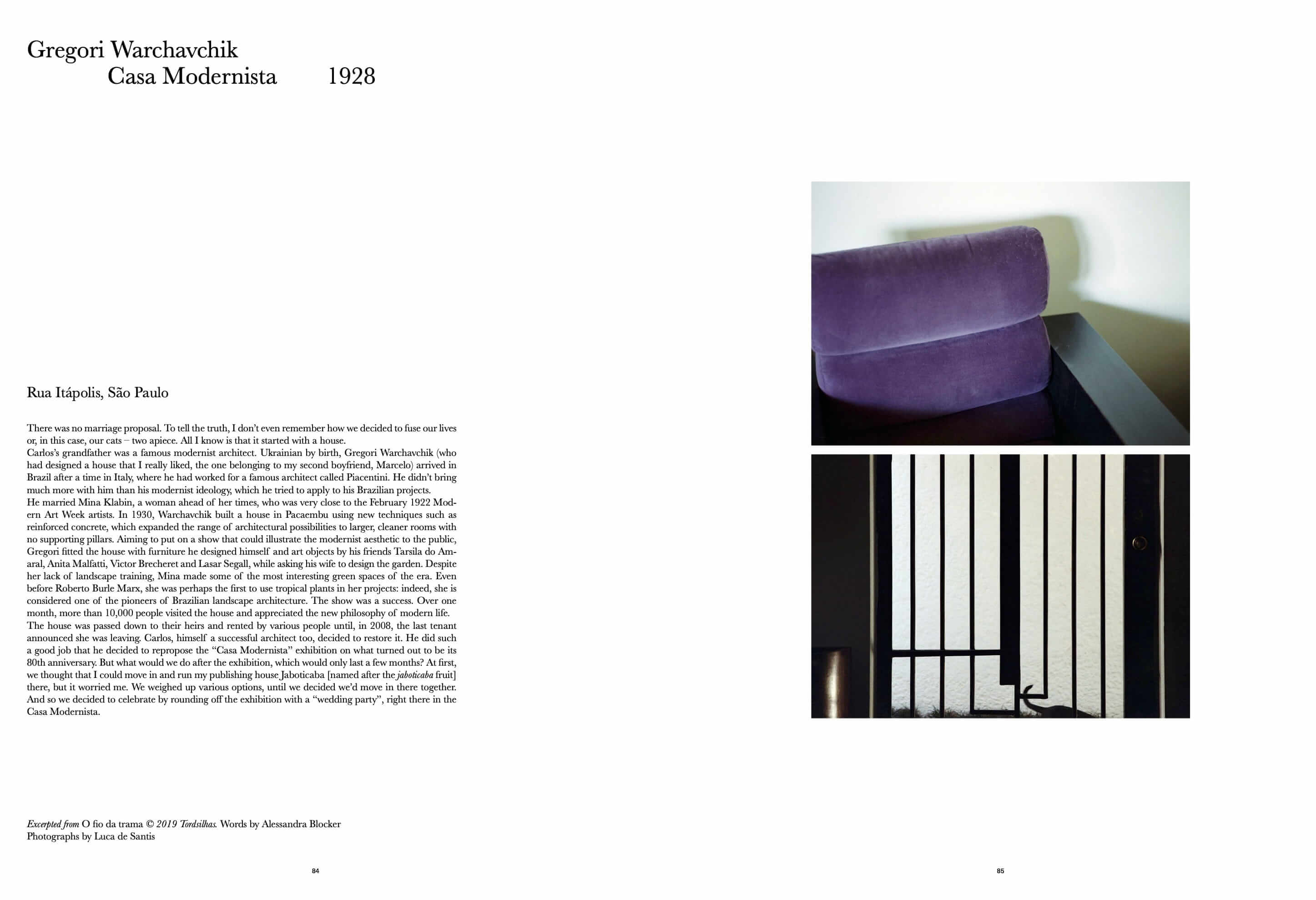
The house was passed down to their heirs and rented by various people until, in 2008, the last tenant announced she was leaving. Carlos, himself a successful architect too, decided to restore it. He did such a good job that he decided to repropose the “Casa Modernista” exhibition on what turned out to be its 80th anniversary. But what would we do after the exhibition, which would only last a few months? At first, we thought that I could move in and run my publishing house Jaboticaba [named after the jaboticaba fruit] there, but it worried me. We weighed up various options, until we decided we’d move in there together. And so we decided to celebrate by rounding off the exhibition with a “wedding party”, right there in the Casa Modernista.